Dogs
Generally safeConsulted references do not classify the plant as toxic for that pet type, while still allowing for mild GI upset if large amounts are chewed.
Verified against ASPCA/provenance audit 2026-05-06 on May 6, 2026.
Sources
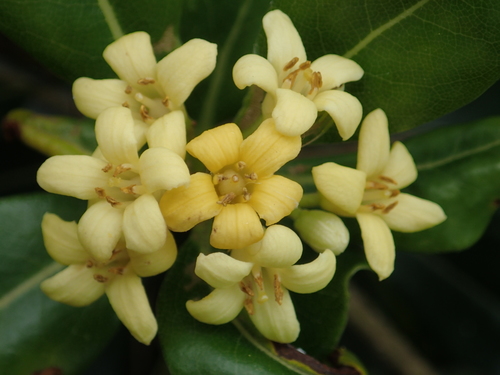
Pittosporum tobira
Japanese Mock Orange is a popular evergreen shrub known for its fragrant, citrus-like flowers and glossy, leathery foliage. It is considered safe for households with pets, though large ingestions of plant material may cause minor digestive discomfort.
Safety status
Dogs
Generally safeConsulted references do not classify the plant as toxic for that pet type, while still allowing for mild GI upset if large amounts are chewed.
Verified against ASPCA/provenance audit 2026-05-06 on May 6, 2026.
Sources
Dogs are fine around Japanese Mock Orange — the ASPCA's Japanese Pittosporum entry lists no toxic principle for dogs, so a chewed branch or a few swallowed berries aren't a poisoning emergency, though a large mouthful of fibrous leaves can still upset a dog's stomach.
Sources: ASPCA.
If a pet has chewed or swallowed plant material and is showing symptoms, contact a veterinarian or poison resource immediately. This product is for structured reference, not diagnosis.
Dogs — concern notes
Common signs
No specific toxicity symptoms are expected, though chewing or swallowing plant material may still cause mild stomach upset.
Escalation note
This plant is listed by ASPCA as non-toxic for this pet. Monitor for digestive upset after large ingestion and contact a veterinarian if symptoms persist.
ASPCA Toxic Plant List
toxicology · 99% reliability
Japanese Pittosporum is listed as non-toxic to both cats and dogs.
NC State Extension Plant Toolbox
botanical · 94% reliability
Pittosporum tobira is a versatile evergreen shrub often used in landscapes for its fragrant flowers and salt tolerance.
No, Japanese Mock Orange (Pittosporum tobira) is listed as non-toxic to dogs by the ASPCA. It is not expected to cause serious harm, though non-toxic does not mean a dog can eat it freely without consequence.
Specific toxicity symptoms are not expected, but chewing or swallowing plant material may cause mild stomach upset, especially if your dog eats a large amount. Monitor for vomiting, loose stools, or lethargy.
A small nibble is unlikely to cause anything beyond minor digestive discomfort. If your dog ate a large quantity and shows signs like persistent vomiting, diarrhea, or lethargy, contact your veterinarian to be safe.
There is no documented toxic dose because the plant is considered non-toxic for dogs. That said, large ingestions of any plant material can cause GI upset; if symptoms persist after your dog ate a significant amount, call your vet.