Christmas, Thanksgiving, or Easter Cactus — Which One Is in Your House?
The three holiday cacti are a tangle of taxonomy and bloom dates, but the pet question is easy — all three are safe for cats and dogs. The plant to actually worry about this season is the one with cherry-red berries on the gift table.
April 28, 20266 min read
A friend hands you a small potted plant in November, says it's a Christmas cactus, and tells you it'll bloom in time for the holidays. Three weeks later it blooms. The in-laws say it's a Thanksgiving cactus. A coworker, glancing at it in the office in March, calls it an Easter cactus. None of you are exactly wrong. There are three holiday cacti, they look almost identical, and the names get used interchangeably even by the people selling them.
The good news: the pet question is the easy part. All three are listed by the ASPCA as non-toxic to cats and dogs. The harder problem this season is a small, festive, red-berried plant that often sits on the same gift table — and that one is genuinely dangerous.
The three holiday cacti
There are, technically, three plants involved, and they live in two different genera:
- Christmas cactus — Schlumbergera × buckleyi (older nurseries still list it as Schlumbergera bridgesii). Drooping, scalloped stem segments. Blooms late November through January.
- Thanksgiving cactus — Schlumbergera truncata. Stem segments have sharp, claw-like notches at the edges. Blooms October through December — which is why most "Christmas cacti" sold at supermarkets in early November are actually this one. They ship them when they're ready to bloom, not when the calendar says.
- Easter cactus — Hatiora gaertneri, formerly Rhipsalidopsis gaertneri, sometimes lumped back into Schlumbergera depending on which botanist you ask. Stem segments are rounded with tiny bristles at the edges. Flowers are flat and star-shaped rather than the swept-back tubes of the Schlumbergera pair. Blooms March through May.
The Easter cactus has been moved between genera enough times that the taxonomy itself is confused. For practical purposes — for buying, growing, and knowing whether the cat will be fine — the genus question doesn't matter. The bloom time and segment shape do.
How to tell them apart at a glance
Once you know what to look for, the three are easy:
- Scalloped segments, drooping habit, winter bloom → Christmas cactus.
- Pointed claw-like segments, more upright, late-fall bloom → Thanksgiving cactus.
- Rounded segments with tiny bristles, star-shaped flowers, spring bloom → Easter cactus.
If your plant is blooming in November, it is almost certainly a Thanksgiving cactus, regardless of what the tag says. If it's blooming in December and the segments droop in soft scallops, it's a true Christmas cactus. If it's blooming in March and you bought it for Easter, it's the Easter one.
The relief here is real. Holiday cacti are popular precisely because they're undemanding, long-lived, and bloom on cue, and the pet question turns out to be a non-issue. The plant that nobody warns you about is the one sitting next to them at the nursery checkout.
The festive plants you brought home this year are mostly fine. The one nobody warned you about is the one with the cherry-red berries.
The plant to actually worry about
Every December, garden centers stock a small, glossy plant covered in bright red berries that look like miniature cherries or peppers. It's marketed as a Christmas cherry, winter cherry, or Jerusalem cherry. The botanical name is Solanum pseudocapsicum. It is in the nightshade family, alongside tomatoes, potatoes, and deadly nightshade — and the resemblance to the toxic side of that family is closer than the resemblance to the edible side.
Jerusalem cherry is sold as a holiday plant for the same reason poinsettias are: it looks the part. Glossy green leaves, scarlet berries, compact size, ready in time for gift season. It also drops berries on the floor as it ages, which is the worst possible failure mode in a household with pets at floor level.
Festive plants you can actually give
If you want a holiday gift plant and you want to skip the toxicology homework, the catalog has a few that are reliably safe and seasonal:
At the garden center
Three quick rules for the holiday aisle:
- If it has bright red berries on a small woody plant, set it down. Jerusalem cherry, ornamental peppers, and a few other red-fruited Solanum relatives all sit in this niche, and most of them will make a pet sick.
- Don't trust the holiday cactus label. "Christmas cactus" is a category, not a botanical claim. Look at the segment shape and the bloom time. Whichever of the three you end up with, the safety answer is the same.
- Watch the gift-table bundle. Festive plants are often sold and gifted in clusters — a cactus, a poinsettia, a small berried thing. The cluster is only as safe as its most dangerous member.
Looking for more pet-safe houseplants beyond the holiday rack? Our curated lists of plants safe for cats and plants safe for dogs are organized by light and care level, so you can find something that actually fits your home.
Plants from this article
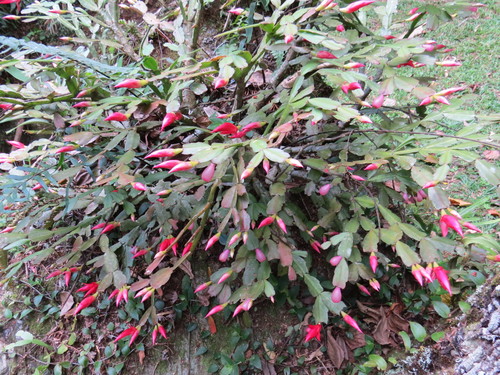
The Christmas Cactus is a popular, low-maintenance flowering succulent known for its segmented, arching stems and vibrant holiday blooms. It is considered non-toxic to pets, though its fibrous nature may cause minor digestive discomfort if consumed in large quantities.
Generally safe for cats & dogs.

The Christmas Orchid is a popular epiphytic orchid known for its large, showy, and fragrant winter blooms. It is considered non-toxic to household pets, though its fibrous nature may cause minor digestive discomfort if consumed in large quantities.
Generally safe for cats & dogs.
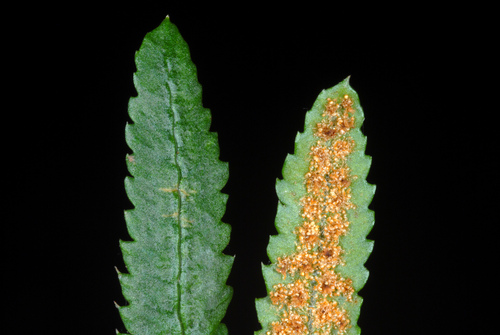
The Christmas Fern is a hardy, evergreen perennial native to North America, prized for its leathery, dark green fronds that remain vibrant throughout the winter months. It is considered safe for households with pets, though its fibrous texture may cause minor digestive discomfort if consumed in large quantities.
Generally safe for cats & dogs.