Cats
Generally safeConsulted references do not classify the plant as toxic for that pet type, while still allowing for mild GI upset if large amounts are chewed.
Verified against ASPCA/provenance audit 2026-05-06 on May 6, 2026.
Sources
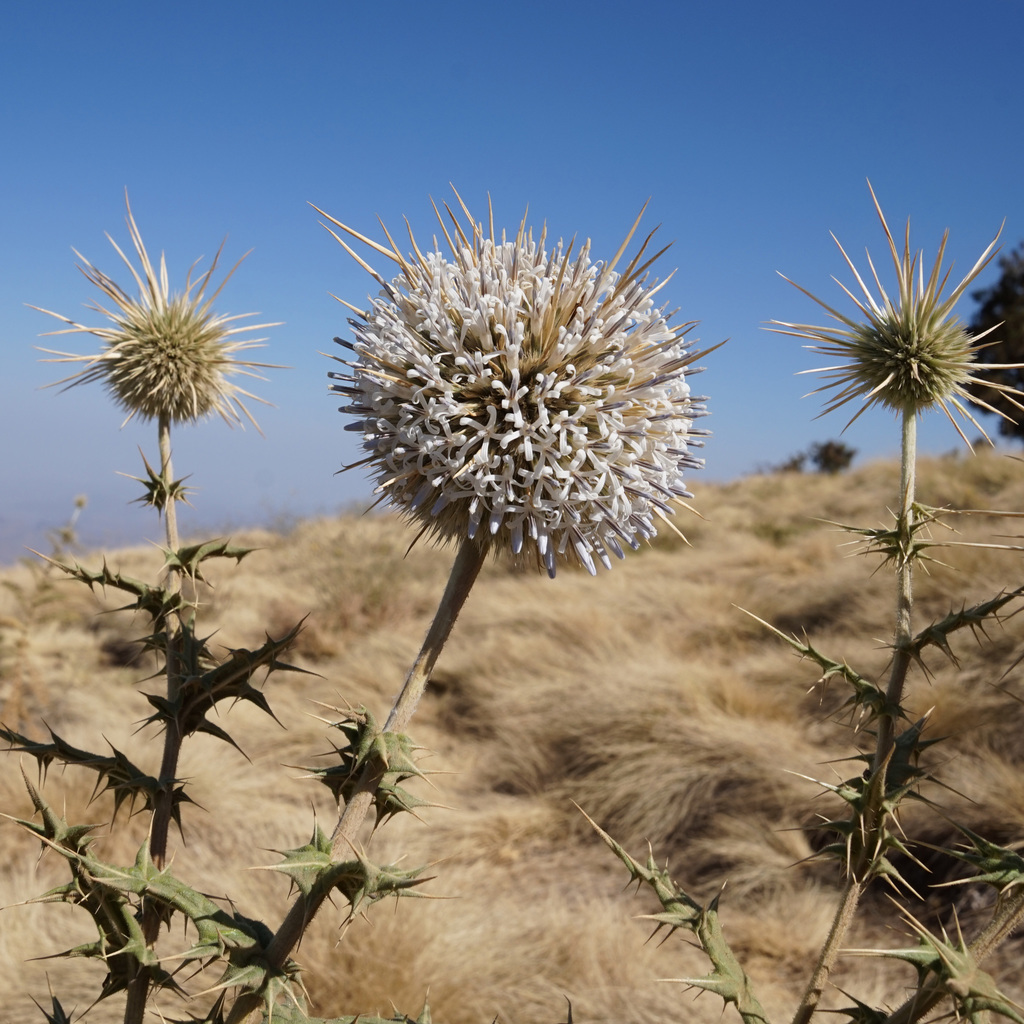
Echinops spp.
Globe Thistle is a striking perennial known for its spherical, metallic-blue flower heads and architectural foliage. It is considered non-toxic to pets, though its fibrous nature may cause minor digestive discomfort if consumed in large quantities.
Safety status
Cats
Generally safeConsulted references do not classify the plant as toxic for that pet type, while still allowing for mild GI upset if large amounts are chewed.
Verified against ASPCA/provenance audit 2026-05-06 on May 6, 2026.
Sources
If a pet has chewed or swallowed plant material and is showing symptoms, contact a veterinarian or poison resource immediately. This product is for structured reference, not diagnosis.
Cats — concern notes
Common signs
None typically expected; however, ingestion of large amounts of fibrous plant material may cause mild vomiting or gastrointestinal upset.
Escalation note
Generally considered safe. If your cat consumes a significant amount and shows signs of distress, contact your veterinarian.
Safer alternatives
No hand-picked alternatives for this plant yet. You can still pick your own using the Compare button on any other plant.
ASPCA Toxic Plant List
toxicology · 99% reliability
Globe Thistle (Echinops spp.) is listed as non-toxic to cats and dogs.
NC State Extension Plant Toolbox
botanical · 94% reliability
Echinops is a genus of flowering plants in the sunflower family, valued for its unique globe-shaped blooms and drought tolerance.
Globe Thistle (Echinops spp.) is considered non-toxic to cats. It is classified as generally safe, meaning it is not expected to cause poisoning — but non-toxic does not mean harmless to eat in quantity.
Ingestion of large amounts of Globe Thistle's fibrous plant material may cause mild vomiting or gastrointestinal upset. Small nibbles are unlikely to cause any symptoms at all.
Monitor your cat for vomiting, lethargy, or signs of abdominal discomfort. If your cat consumed a significant amount and is showing distress, contact your veterinarian for guidance.
Even non-toxic plants can cause GI upset when eaten in large quantities because cats are obligate carnivores and their digestive systems are not designed to process large amounts of fibrous plant material — the bulk and fiber, not any toxin, is what causes irritation.
Globe Thistle (Echinops spp.) is considered non-toxic to dogs. It is classified as generally safe, meaning it is not expected to cause poisoning if your dog chews on or ingests part of the plant.
Because Globe Thistle has fibrous plant material, eating a large amount may cause mild vomiting or gastrointestinal upset. Small nibbles are unlikely to cause any reaction at all.
Globe Thistle is not considered toxic, but large ingestions of fibrous plant material can cause temporary GI upset such as vomiting. Monitor your dog for signs of distress; if symptoms persist or your dog seems uncomfortable, contact your veterinarian.
Globe Thistle has prickly, thistle-like foliage that could cause minor mouth or paw irritation if your dog handles it roughly, though the plant itself is non-toxic. If you notice excessive pawing at the mouth or reluctance to eat after contact, a quick vet check is reasonable.