Sago Palm Isn't Actually a Palm — and What to Plant Instead
The plant sold as "sago palm" is a cycad, a 280-million-year-old lineage that pre-dates dinosaurs and can be fatal to cats and dogs. Here are three pet-safe palms to grow instead.
April 28, 20265 min read
At the garden center, it sits between the kentia and the areca, dressed in glossy fronds and tagged with a name that puts it firmly in the palm family. It isn't a palm. It isn't even close. The plant we call sago palm — Cycas revoluta — belongs to a separate, far older lineage of plants, and the difference matters because every part of it is dangerous to cats and dogs.
The misnomer is the problem. A friend recommends a "low-maintenance palm." A nursery groups it with the kentia and areca on the same display. A houseplant guide files it under palms for beginners. By the time the plant is on the kitchen counter, nobody has thought about toxicity, because nobody has thought about cycads.
The botanical truth
True palms belong to Arecaceae, a family of flowering plants that produce fruit — coconuts, dates, areca nuts. They're young in evolutionary terms, with a fossil record stretching back roughly 80 million years.
Cycads are something else entirely. They are gymnosperms, more closely related to conifers than to palms, and they reproduce by cones rather than flowers. The cycad lineage has been making plants for about 280 million years. Cycads were here before dinosaurs walked, and they were here after the dinosaurs left.
So when Cycas revoluta shows up next to Howea forsteriana on a shelf labelled "tropical palms," the two plants are separated by hundreds of millions of years of evolution and an entire mode of reproduction. The visual resemblance — stiff, symmetric fronds emerging from a stout central trunk — is convergent, not familial. They look alike the way a hummingbird and a hawkmoth look alike.
The mortality rate, even with treatment, is high. The ASPCA's full entry and the canonical safety reference on this site — Sago Palm (Cycas revoluta) — go into the specifics. But for the purposes of choosing a houseplant: this one belongs in homes without curious mouths.
If a friend tells you their sago is "just a palm," they're describing a plant three families and 280 million years removed from a coconut tree.
What to plant instead
The good news: real palms are easy, and several of them are reliably safe for both cats and dogs. The three below cover most of what people actually want when they reach for a sago — the upright, feathery, vaguely tropical silhouette — without the toxicology footnote.
The ponytail is worth dwelling on for a moment. It's the second imposter on this list — sold as a palm, structured nothing like one — and that's exactly the point. A misnomer is not, by itself, evidence of danger. Beaucarnea and Cycas are both labelled "palm" in nurseries, both grouped with palms in plant guides, both wildly different from the true thing. One of them will kill your cat. The other won't. You can't tell from the name; you have to look at the actual plant.
How to spot the difference at the nursery
A few quick tells, no botany degree required:
- Cycad (sago): stiff, symmetric, almost plastic-feeling fronds emerging from a single squat trunk that often resembles a pineapple. Small, slow-growing. New growth comes up tightly coiled, like a fern, and unfurls in a perfect circle.
- True palm (parlor, areca, kentia): soft, arching, often-feathery fronds emerging from one or many slender stems. The trunks are smooth or fibrous, never pineapple-like. New growth is loosely held and arching from the start.
- Ponytail palm: a swollen, woody base — sometimes called a "caudex" — with a fountain of long, thin, strappy leaves cascading down. Not pinnate. Not feathery. Looks like an onion wearing a ponytail.
If a plant has a stiff, symmetric, glossy crown of fronds emerging from a stout, scaled trunk, it's almost certainly a cycad. Put it back.
If you already own one
Keeping it out of reach is not enough. Cats jump, dogs counter-surf, and a single seed can be lethal. The two safe options are: rehome the plant to someone without pets, or replace it. Pet-proofing a sago by location is not a strategy — it's a near-miss waiting to happen.
If anything has already happened, don't wait for symptoms to develop. Cycasin damage progresses quickly, and survival rates are dramatically better with early intervention. Call a vet or a 24-hour poison hotline now, then go to the nearest emergency clinic.
Looking for more pet-safe options beyond palms? Our curated lists of plants safe for cats and plants safe for dogs are organized by light and care level, so you can find something that actually fits your home.
Plants from this article
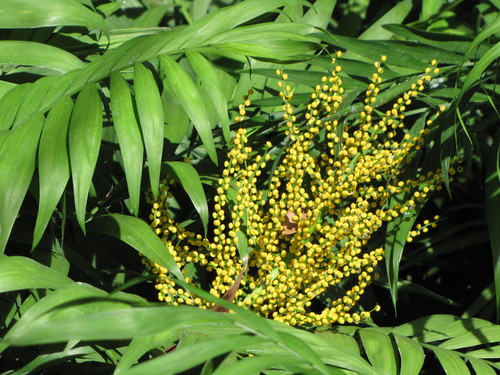
The Bamboo Palm is a popular, slow-growing indoor palm known for its elegant, feathery fronds and ability to thrive in lower light conditions. It is considered a safe choice for households with pets, though its fibrous nature may cause minor digestive discomfort if consumed in large quantities.
Not yet rated for cats.
Generally safe for dogs.
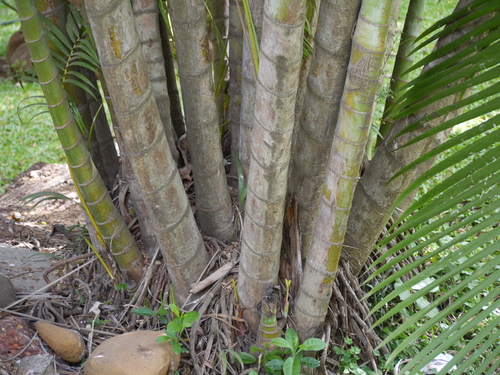
The Areca Palm is a popular indoor palm known for its feathery, arching fronds and air-purifying qualities. It is considered safe for households with pets, though its fibrous nature may cause minor digestive discomfort if ingested in large quantities.
Generally safe for cats & dogs.
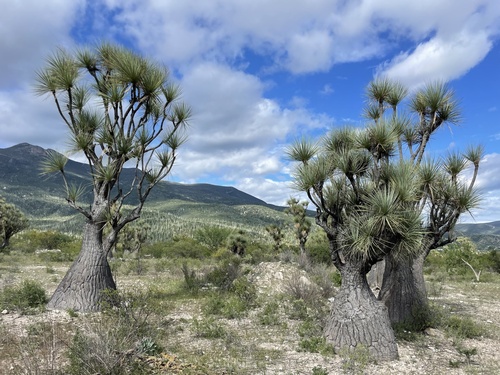
The Bottle Palm is a popular, slow-growing succulent known for its swollen, water-storing trunk and long, arching, grass-like leaves. Despite its common name, it is a member of the Asparagaceae family and is not a true palm.
Uncertain for cats.
Generally safe for dogs.