The Peace Lily Isn't a Lily — But It's Still a Problem
Peace lily is Spathiphyllum, an aroid in the same family as philodendron and dieffenbachia. Its calcium oxalate crystals will hurt your cat. True lilies — Lilium and Hemerocallis — will kill her. Two different plants, two very different stories.
April 28, 20268 min read
A friend's cat sniffs at a bouquet on the counter. Three days later the cat is in renal failure, and nobody on the way to the emergency clinic is sure exactly which plant did it. The phone in the back seat is open to Google. The search is peace lily toxic to cats. The plant on the counter wasn't a peace lily.
This is the most consequential misnomer in the houseplant world. Peace lily is Spathiphyllum — a tropical aroid that will give a cat a painful mouth and a bad night, but rarely worse. True lily is Lilium or Hemerocallis — flowers that, in cats, can cause complete kidney failure within seventy-two hours. The two plants share a four-letter word and almost nothing else, and the gap between them is the gap between a vet visit and a funeral.
The botanical truth
The peace lily belongs to Araceae, the aroid family. Its closest relatives are philodendron, monstera, dieffenbachia, anthurium, and the calla "lily" — also not a lily. Aroids share a distinctive flowering structure: a spathe (the white sail) wrapped around a spadix (the small finger of true flowers). When you look at a peace lily, you are looking at an aroid doing what aroids do.
True lilies belong to Liliaceae. The genus Lilium — Easter, tiger, Asiatic, Oriental, stargazer — and the closely related Hemerocallis (daylily) are the dangerous ones. They are bulb-grown perennials, six-tepaled, often heavily fragrant, mostly sold as cut flowers or garden plants rather than houseplants. The two families have been on separate evolutionary paths for roughly 100 million years. They share neither structure, nor lineage, nor toxin, nor outcome.
The English word "lily" is a marketing convenience. It has been stapled onto plants from at least a dozen unrelated families: peace lily (aroid), calla lily (aroid), lily of the valley (asparagus family — and itself dangerously cardiotoxic), kaffir lily (amaryllis family), canna lily (canna family), water lily (Nymphaeaceae), peruvian lily (Alstroemeriaceae). Some are safe, some are mildly toxic, some are deadly. The name tells you nothing.
If you only remember one thing from this post: a cat that has touched a true lily needs to be at a clinic within hours, not by morning. Treatment that begins inside the first 18 hours has dramatically better outcomes than treatment that begins at 36 or 48. Peace lily exposure is unpleasant; Lilium exposure is a race against the clock.
The full clinical picture lives at the ASPCA: their entries on peace lily and Easter lily are worth bookmarking. Our canonical safety pages — Peace Lily (Spathiphyllum) and Easter Lily (Lilium longiflorum) — have the same picture in our format.
A peace lily will give your cat a bad night. A true lily will give your cat a funeral. Two different plants. One shared word.
What to plant instead
Most people buying a peace lily are buying a particular look: glossy dark-green leaves, a tidy mound that doesn't outgrow a corner, an easygoing tolerance for low light, and the occasional white bloom to break up the green. Three pet-safe plants do almost all of that without the calcium-oxalate footnote.
The spider plant deserves a moment. It is the workhorse of the pet-safe houseplant world: it tolerates almost everything, it propagates itself for free, and it has been on the ASPCA's non-toxic list for as long as that list has existed. If a peace lily is sitting somewhere a cat can reach it, a spider plant in the same pot will quietly do almost the same job and remove the worst of the risk.
How to tell the two plants apart
There is no botany degree required, just a couple of seconds:
- Peace lily (Spathiphyllum): lance-shaped, dark-green leaves rising from the soil in a tidy clump. The "flower" is a single white sail (the spathe) wrapped around a creamy yellow finger (the spadix). Sold as a houseplant, almost always in soil, often labelled simply "peace lily" or Spathiphyllum.
- True lily (Lilium): tall stems with whorled or alternate strap leaves and large, six-tepaled trumpet flowers — often white, pink, orange, or speckled — almost always strongly fragrant. Sold as cut flowers in bouquets, as bulbs, or as garden perennials. Rarely a houseplant.
- Daylily (Hemerocallis): clumps of grass-like strap leaves at the base, with bare stalks topped by big six-petaled flowers that last a single day. Common in landscaping, in mixed bouquets, and in cottage-style flower borders.
The shorthand: if it has a single white sail-and-finger flower coming up out of a clump of dark leaves, it is a peace lily — uncomfortable for pets, not deadly. If it has a big trumpet flower with six petals on a tall stem, you are looking at a Lilium or a Hemerocallis, and a cat must not be in the same room with it.
A word about cut-flower bouquets
This is where most cats meet true lilies. Florist bouquets routinely contain stargazer, Asiatic, or Oriental lilies — they are popular because they are cheap, fragrant, and dramatic. A cat in a household that receives flowers as gifts is, statistically, far more likely to encounter a Lilium than the average houseplant buyer is.
The two safe-keeping rules are simple:
- Inspect every bouquet before it comes inside. Pick out anything that looks like a true lily — the trumpet flower with six tepals, often heavily fragrant — and either return it, give it away, or put it somewhere a cat physically cannot reach (a closed bathroom is not enough; cats open doors). Even fallen pollen on a counter is enough to poison a grooming cat.
- Vase water from a lily bouquet is contaminated. A cat that drinks from it has been exposed. If you discover a lily after the fact, treat it as an exposure regardless of whether you saw the cat at the vase.
Florists are increasingly willing to make a "no lilies" bouquet on request — Lilium is named on the request, not "lily," because the second word includes peace lily, calla, and a half-dozen others that don't matter here.
If you already own a peace lily
A peace lily is not a sago palm. The risk is real but not catastrophic, and a household with cautious pets and a high shelf can usually coexist with one. The safest moves, in order:
- Move the plant somewhere a cat or dog physically cannot reach the leaves. Hanging baskets and tall plant stands work better than counters.
- Pick up dropped leaves immediately. A wilting leaf on the floor is a chew toy.
- If a pet has chewed any part of the plant, expect immediate oral pain and drooling. Rinse the mouth gently with cool water if the animal will tolerate it, and call a vet — most cases resolve with supportive care, but a vet should make that call, not a website.
If you've found chewed leaves on a true lily, do not finish reading this post. Put the cat in a carrier and go. Bring a leaf or photo of the plant. Time matters more than anything else you could be doing right now.
Looking for more pet-safe houseplants beyond the peace-lily niche? Our curated lists of plants safe for cats and plants safe for dogs are organized by light and care level, so you can find something that actually fits your home.
Plants from this article
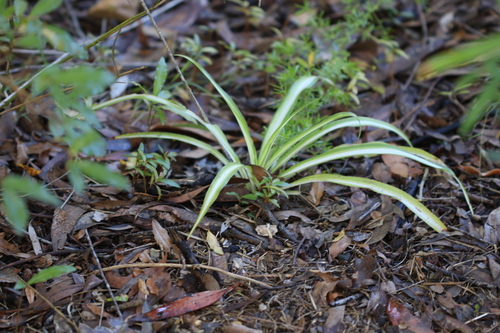
The spider plant is a popular, easy-to-care-for houseplant known for its arching, grass-like foliage and trailing plantlets. It is widely considered safe for households with pets, though large ingestions of fibrous material may occasionally cause mild digestive upset.
Generally safe for cats & dogs.
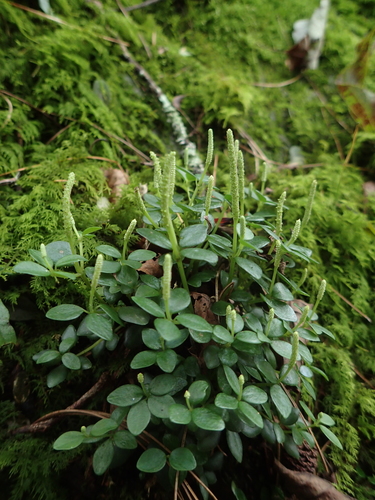
The American Rubber Plant is a popular, low-maintenance houseplant known for its thick, succulent-like leaves. It is considered non-toxic to pets, though ingestion of large amounts of plant material may cause minor digestive discomfort.
Generally safe for cats & dogs.
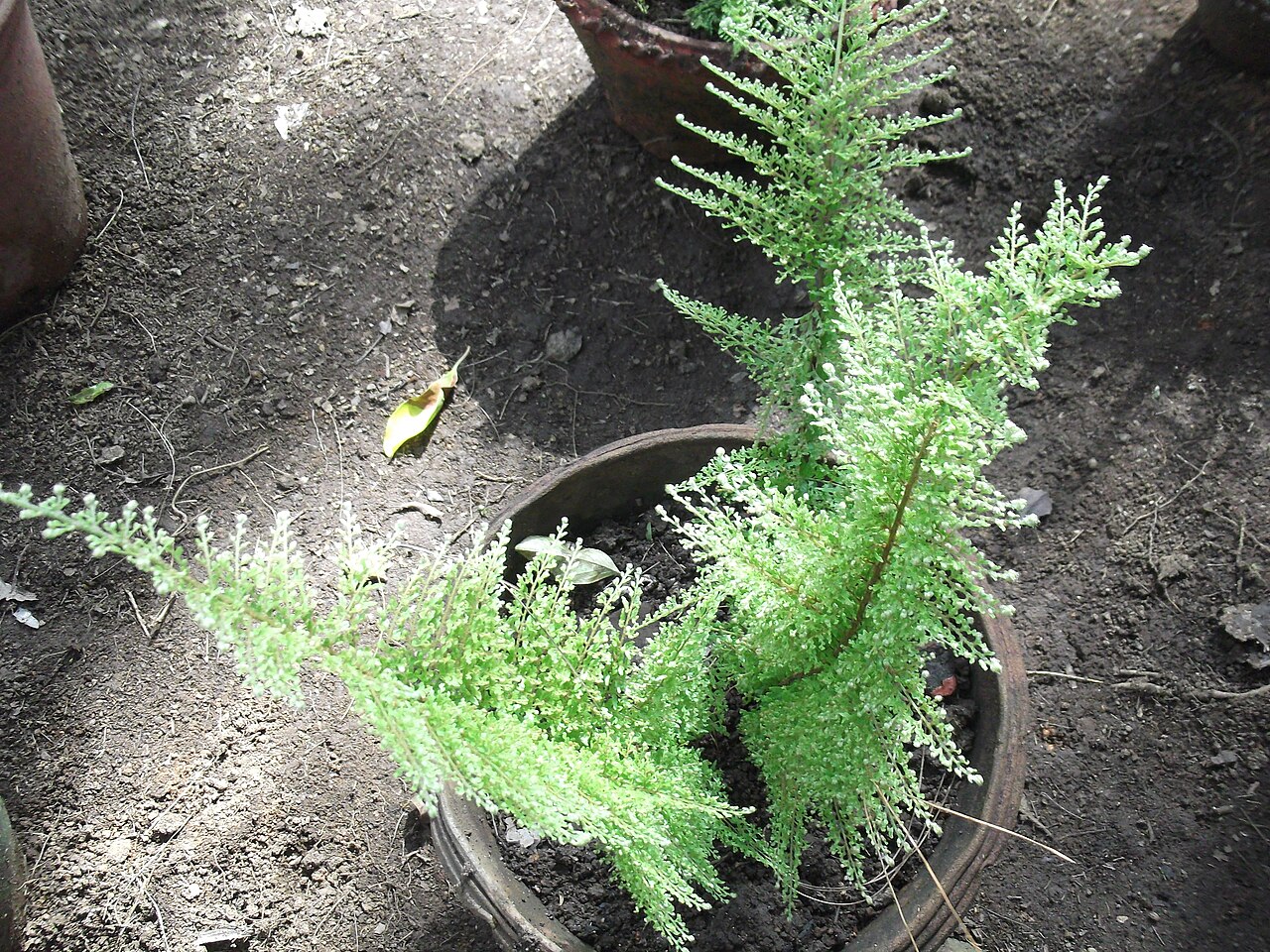
The Boston Fern is a popular, lush houseplant known for its arching fronds and preference for high humidity. It is widely considered safe for pets, though ingestion of any plant material can occasionally cause minor digestive upset.
Uncertain for cats.
Generally safe for dogs.